
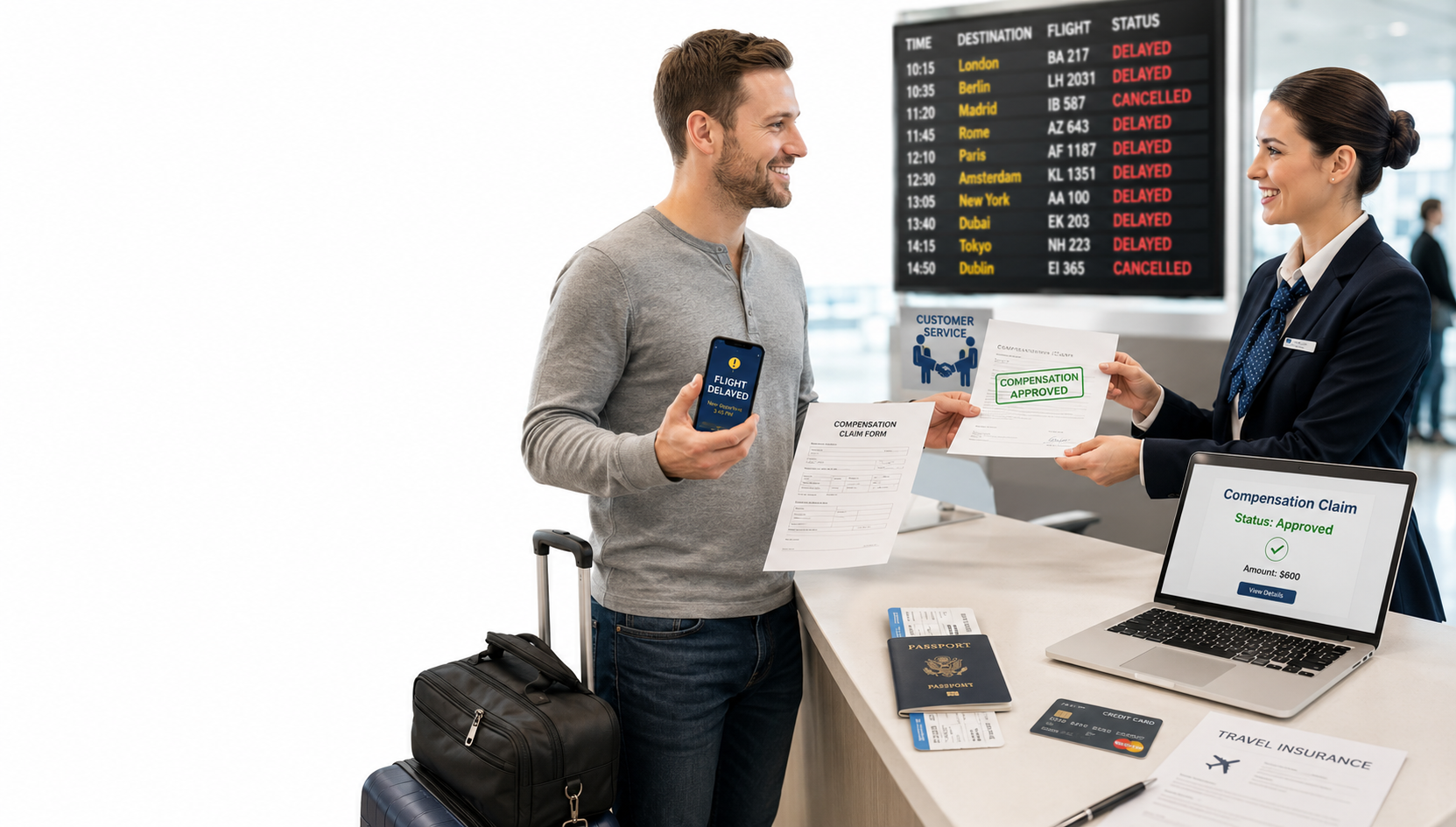
Travel disruption compensation is something most travelers only think about after a flight is delayed, a hotel reservation falls through, or checked baggage does not arrive at its destination. These situations happen without warning and can lead to extra expenses, missed plans, and a fair amount of stress. Understanding how compensation works, and knowing the right steps to request it, can help travelers recover eligible costs and resolve disputes more effectively. How to Request Compensation for Travel Disruptions
What Counts as a Travel Disruption?
A travel disruption is any unexpected event that interrupts a trip as planned. Some of the most common examples include:
- Flight delays
- Flight cancellations
- Missed connections
- Lost or delayed baggage
- Hotel reservation problems
- Cruise itinerary changes
- Train delays
- Rental car issues
Compensation for any of these situations depends on the travel provider's policies, the laws that apply to the route or location, and the specific circumstances surrounding the disruption. No two claims work exactly the same way, which is why documentation and a clear process matter so much.
When May You Be Eligible for Compensation?
Not every inconvenience qualifies for reimbursement, but several common situations often do. Travelers may have a stronger case for compensation when the disruption results from:
- Airline-caused delays, such as mechanical issues or crew scheduling problems
- Cancelled flights, cruises, or tours initiated by the provider
- Booking errors made by the airline, hotel, or travel agency
- Baggage delays or mishandling
- Overbooked flights that result in denied boarding
- Hotel overbooking that leaves a confirmed guest without a room
Eligibility still varies depending on the carrier, the travel provider, the destination, and the regulations that apply to that trip. Reviewing the provider's own terms is a useful first step before submitting a request.
Common Types of Travel Compensation
Compensation for travel disruptions does not always come in the form of cash. Depending on the provider and the situation, travelers may be offered:
- Refunds for unused or cancelled services
- Travel vouchers for future bookings
- Meal vouchers during long delays
- Hotel accommodations for overnight disruptions
- Alternative transportation to reach the final destination
- Baggage reimbursement for delayed or damaged luggage
- Reimbursement for reasonable out-of-pocket expenses caused by the disruption
How to Request Travel Disruption Compensation
Requesting compensation is easier to manage when it is broken into clear steps. The process below applies broadly to airlines, hotels, cruise lines, and other travel providers.
Step 1: Save All Travel Documents
Hold on to everything connected to the trip, including:
- Boarding passes
- Booking confirmations
- Hotel reservations
- Receipts
- Baggage claim tags
- Emails
- Text notifications
Step 2: Document the Disruption
As the disruption unfolds, gather evidence that shows what happened and when. Useful records include photos of delay boards or damaged luggage, screenshots of cancellation notices, delay notifications sent by the provider, notes from conversations with staff, and receipts for any expenses incurred as a result.
Step 3: Contact the Travel Provider
Reach out to the airline, hotel, or travel provider as soon as possible. This can usually be done by contacting customer service, submitting an online claim form, or visiting a service desk at the airport or hotel. Keep a written record of every conversation, including the date, the name of the representative, and what was discussed.
Step 4: Request Compensation Clearly
A strong request is specific and easy to follow. Explain the issue in plain terms, attach supporting evidence, state exactly what type of reimbursement is being requested, and keep the tone professional throughout. Providers are generally more responsive to requests that are organized and easy to review.
Step 5: Follow Up if Necessary
Most travel providers list expected response timelines for claims. When that window passes without a reply, follow up with the claim or reference number in hand. Keeping a simple log of dates and communications makes it easier to escalate the matter if a resolution still does not follow.
Step 6: Escalate the Matter
When a provider does not respond or denies a reasonable claim, travelers have a few additional options, including:
- Filing a credit card dispute for charges tied to the disruption
- Submitting a claim through a travel insurance policy
- Posting the issue on a consumer complaint platform
- Reporting the matter to a relevant government consumer agency
What Evidence Should You Keep?
Strong documentation is often the difference between a claim that gets resolved and one that stalls. Keep the following on hand for at least several months after a trip:
- Boarding passes
- Tickets
- Booking confirmations
- Expense receipts
- Hotel invoices
- Transportation receipts
- Photos of the disruption or its impact
- Email correspondence with the provider
- Chat transcripts from customer service conversations
This kind of record keeps the timeline clear and gives a travel provider, credit card company, or complaint platform everything needed to evaluate the situation fairly.
Common Mistakes Travelers Make
- Throwing away receipts before a claim is fully resolved
- Accepting verbal promises from staff without written confirmation
- Waiting too long to file a claim after the disruption occurs
- Not reading the travel provider's compensation policy before making a request
- Missing claim deadlines set by the airline, hotel, or insurance provider
Tips to Reduce Travel Disruptions
- Book directly with the airline or hotel when possible
- Purchase travel insurance for trips with tight connections or high upfront costs
- Confirm reservations a day or two before departure
- Arrive at the airport or station with extra time built in
- Monitor travel alerts and weather forecasts leading up to the trip
- Keep digital and printed copies of important travel documents
Travel Problems and Possible Resolutions
|
Travel Problem |
Possible Resolution |
|
Flight Delay |
Compensation request or voucher |
|
Flight Cancellation |
Refund or rebooking |
|
Lost Baggage |
Baggage claim |
|
Hotel Overbooking |
Alternative accommodation |
|
Cruise Cancellation |
Refund or future cruise credit |
|
Booking Error |
Customer service resolution |
Understanding Your Consumer Rights
Consumer protections related to travel disruptions come from a mix of sources, and it helps to have a general sense of where they apply:
- Airline policies: which outline what is offered for delays, cancellations, and baggage issues
- Credit card protections: which may cover certain trip disruptions or purchase disputes
- Travel insurance: which can reimburse specific covered losses depending on the policy
- Refund request procedures: which vary by provider and by the type of service booked
These rights vary depending on the travel provider, the destination, and the regulations that apply to a given trip, so reviewing the specific terms attached to a booking is always worthwhile.
How RaiseAComplaint.com Can Help
RaiseAComplaint.com gives travelers a place to share what happened, document unresolved issues, and raise complaints against airlines, hotels, and other travel providers. Publishing a clear, factual account of a disruption can help other travelers make informed decisions and can encourage businesses to engage constructively toward a resolution. The platform does not guarantee refunds or compensation, but it does give unresolved complaints visibility that a single phone call often cannot.
The Bottom Line
Travel disruption compensation is easier to secure when travelers act quickly, keep thorough documentation, and understand the provider's specific policies. Communicating clearly and professionally throughout the process, while following up when needed, gives a claim the best chance of a fair outcome. Staying organized from the start of a trip, and turning to trusted consumer complaint channels when a provider does not respond, helps travelers recover what they are owed with far less frustration.
Frequently Asked Questions
Can I receive compensation for a delayed flight?
Compensation for a delayed flight depends on the cause of the delay and the airline's specific policy. Delays caused by the airline, such as mechanical or staffing issues, are more likely to qualify than delays caused by weather or air traffic control.
What should I keep after a travel disruption?
Keep boarding passes, booking confirmations, receipts, baggage claim tags, and any emails or messages from the provider. This documentation supports a compensation request and helps if the claim needs to be escalated later.
How long do travel compensation claims take?
Response times vary by provider, but many airlines and hotels aim to respond within a few weeks. Complex claims involving baggage or insurance can take longer, so following up with a reference number helps keep the process moving.
Can I claim hotel expenses after a cancelled flight?
Some airlines reimburse reasonable hotel expenses when a cancellation is their responsibility, particularly for overnight delays. Reviewing the airline's policy and keeping the hotel receipt is the best way to support this type of request.
Does travel insurance cover delays?
Many travel insurance policies include coverage for delays, cancellations, or missed connections, though the specific terms vary by policy. Checking the policy details before filing a claim helps confirm what is actually covered.
Can I dispute travel charges with my credit card company?
Many credit card issuers allow cardholders to dispute charges tied to a travel disruption, especially when a service was not delivered as promised. Contacting the card issuer directly is the best way to learn what documentation is required.
What happens if my baggage is delayed?
Airlines typically ask travelers to file a delayed baggage report at the airport before leaving. Many airlines also reimburse reasonable expenses for essential items purchased while waiting for the bag to arrive.
Where can I report unresolved travel complaints?
Unresolved travel complaints can be reported directly to the provider, a relevant government consumer agency, or a consumer complaint platform such as RaiseAComplaint.com. Sharing a documented account often helps move a stalled claim forward.