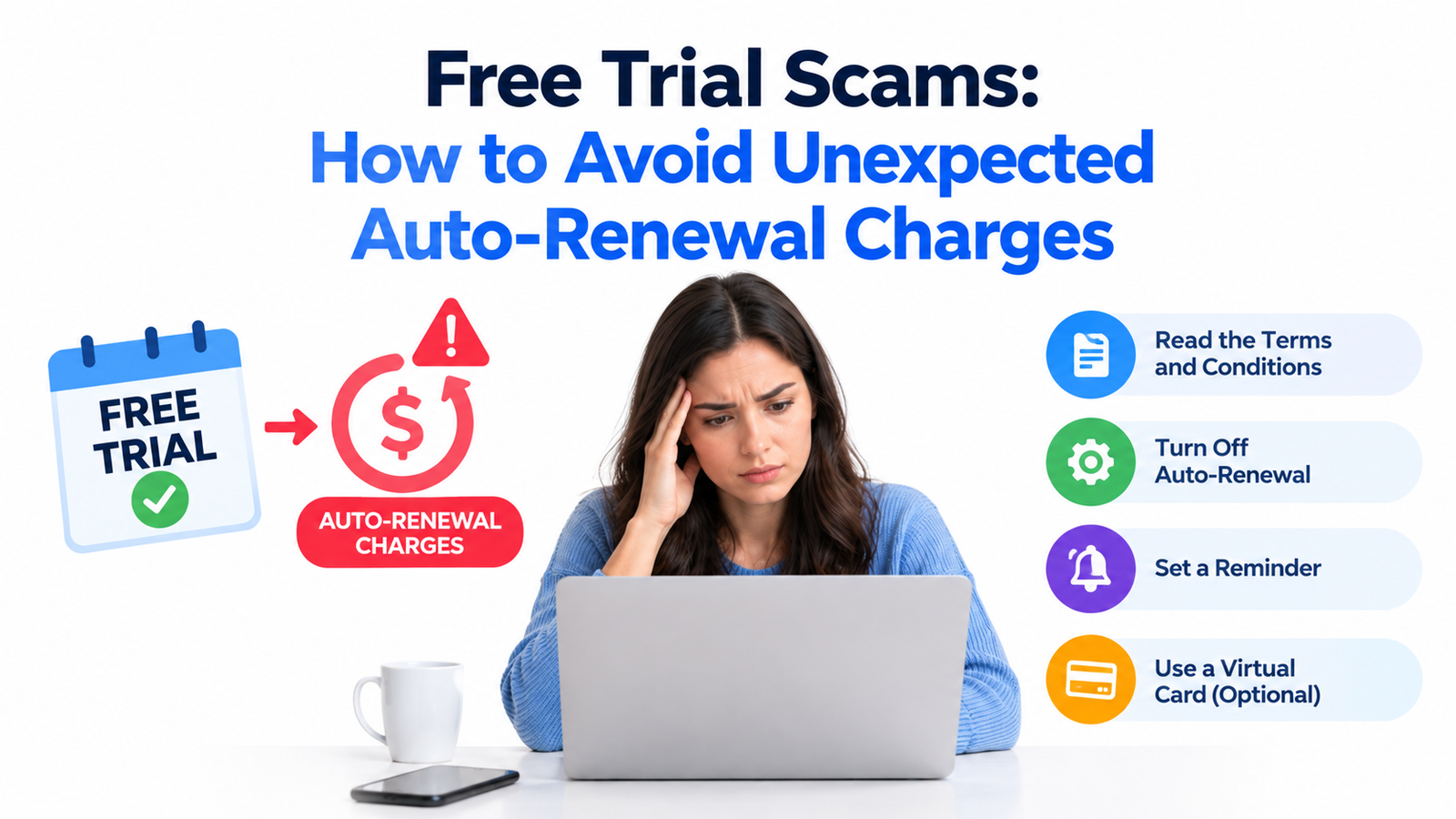
A free trial gives a new customer temporary access to a product or service, usually for seven to thirty days, without an upfront fee. Streaming platforms, software companies, and subscription boxes use trials to let people experience the product before committing to a paid plan. The business model depends on one detail most consumers skip past: entering payment information at sign-up. Rather than requiring a second purchase decision when the trial ends, the company stores the card on file and automatically bills the account once the trial period closes. Free Trial Scams
This billing method, known as negative option marketing, shifts the burden onto the customer to cancel rather than requiring the customer to opt in again. Negative option billing is legal under federal law, but it must include clear disclosure of the trial length, the price after conversion, and an easy way to cancel. Many companies follow the letter of the law while making the cancellation path deliberately difficult to find, which is where most free trial scams and subscription traps begin.
Why Companies Rely on Auto-Renewal
Auto-renewal keeps revenue predictable and reduces the friction that comes with asking customers to resubscribe every month. Behavioral research consistently shows that consumers forget trial end dates, underestimate how often they will use a service, or delay canceling until the charge already appears on a statement. Companies build entire billing strategies around this tendency, sometimes called subscription inertia.
A platform earns far more revenue from a silent auto-renewal than from a checkout page that asks the customer to actively confirm a new charge every cycle. This explains why recurring payments feel so common across streaming, software, and subscription box industries: the business model rewards a low-friction sign-up paired with a high-friction cancellation.
Common Free Trial Traps
- Short trial windows that expire before a customer has time to evaluate the product properly
- Cancel buttons buried several menus deep, or hidden behind a "pause" or "downgrade" option instead of an outright cancel
- Cancellation that requires a live phone call during limited business hours
- Trials that silently upgrade into a higher-priced tier instead of the plan originally advertised
- Confirmation emails that never arrive, leaving no proof a cancellation request was received
- Companies that require a mailed cancellation letter for an account created entirely online
Industries Where Subscription Traps Are Most Common
Some industries rely on free trials and auto-renewal charges far more heavily than others. The table below compares typical trial lengths and the most common traps consumers report in each category.
|
Industry |
Typical Trial Length |
Common Trap |
|
Streaming platforms |
7–30 days |
Automatic upgrade to an annual plan after a short monthly trial |
|
Meal delivery services |
1–2 weeks |
Weekly boxes ship and charge automatically unless paused |
|
Fitness and workout apps |
7–14 days |
Cancellation requires contacting support instead of a self-serve toggle |
|
Software and productivity tools |
14–30 days |
A card is required at sign-up even for a "free" tier |
|
Online course platforms |
7 days |
Full course price charged the moment the trial ends |
|
Beauty and lifestyle subscription boxes |
30 days |
The next box is charged and shipped before the trial officially ends |
|
Mobile apps and games |
3–7 days |
In-app purchase auto-renewal is buried in phone settings, not the app itself |
Warning Signs Before You Sign U
- No visible mention of the price after the trial period ends
- Card details required before any product access is granted
- Cancellation instructions are absent from the sign-up page
- Recent company reviews mention difficulty canceling
- Trial length is unusually short compared to competitors
- Terms use vague renewal language such as "continues automatically"
Hidden Terms Consumers Overlook
Auto-renewal clauses often sit inside the terms of service rather than the sign-up page itself, described in a single sentence stating the subscription "continues automatically at the then-current rate." Consumers overlook several other details in this section: the price increase that takes effect once the trial converts, non-refundable clauses that block a refund even for an accidental renewal, and mandatory arbitration clauses that limit legal options if a billing dispute escalates. Reading the cancellation and billing section of the terms before entering a card number takes two or three minutes and often reveals how difficult cancellation will be later. Company Charges You Incorrectly
How to Cancel a Free Trial Correctly
Canceling the right way, and documenting it, prevents most billing disputes before they start.
- Log in to the account directly, not through an email link, and locate account or billing settings.
- Find the subscription or membership tab, which is usually separate from general profile settings.
- Select cancel, not pause or downgrade, since some companies use softer wording to keep the account active.
- Complete every screen in the cancellation flow, including any retention offers, until a confirmation message appears.
- Save the confirmation email, confirmation number, or a screenshot of the final cancellation screen.
- Check the next billing statement to confirm no additional charge posted.
What to Do If You've Already Been Charged
An unexpected charge does not mean the cancellation window has closed for good. Start by reviewing the company's refund and cancellation policy, usually posted in the help center or terms of service. Contact customer support in writing through email or in-app chat rather than by phone alone, and request written confirmation of both the cancellation and any refund. Note the date, time, and name of any representative involved.
Companies sometimes refund a single accidental charge as a goodwill gesture, particularly when the cancellation attempt happened close to the renewal date. Watch the next billing cycle closely, since a canceled subscription can occasionally continue to charge due to a processing error rather than intentional wrongdoing.
How to Dispute Unwanted Recurring Charges
A billing dispute with a credit card issuer becomes the next step once a direct request to the company goes unanswered or gets denied. Under the Fair Credit Billing Act, credit card holders can dispute a charge in writing within sixty days of the statement date that included the error. Debit card holders have similar protections under the Electronic Fund Transfer Act, though the reporting window is shorter, and faster action matters more.
To file a dispute, contact the card issuer directly, describe the charge, and include documentation such as the cancellation confirmation, screenshots, or email correspondence with the company. Card issuers investigate the claim and can reverse the charge during that process. RaiseAComplaint.com gives consumers a place to document these billing disputes and share detailed accounts of a subscription trap, building a public record that can support a stronger case with a bank or card issuer. This process does not guarantee a refund, but it adds transparency and useful documentation to the dispute.
Your Consumer Rights Regarding Recurring Subscriptions
Consumer protection around subscriptions runs through a mix of federal and state law. The Restore Online Shoppers' Confidence Act, known as ROSCA, requires online sellers to disclose the material terms of a recurring charge clearly, obtain express consent before billing, and provide a simple way to stop future charges. The Federal Trade Commission enforces ROSCA directly and has brought several major cases against subscription companies over difficult cancellation processes.
The FTC's broader Negative Option Rule, often called the click-to-cancel rule, would have required cancellation to be at least as easy as sign-up across nearly all subscription and free trial businesses. A federal appeals court vacated that rule in 2025 on procedural grounds, so it is not currently in effect. The FTC has continued pursuing subscription companies under its existing authority and opened a new rulemaking process in 2026 aimed at reviving similar protections, though a final rule remains years away.
Roughly thirty states have passed their own automatic-renewal laws in the meantime, some of which impose stricter disclosure and cancellation requirements than current federal law does. California, for example, requires companies to send a reminder before certain renewals and to offer a cancellation method that matches the sign-up method. Consumers should check the consumer protection resources specific to their state, since the exact rules vary by location. This information is educational and not a substitute for legal advice.
Best Practices to Avoid Subscription Traps
- Use a calendar reminder set for two to three days before the trial ends
- Consider a virtual card number with a spending limit for any trial sign-up
- Read the cancellation section of the terms before entering payment details
- Cancel through the account dashboard and save proof of cancellation immediately
- Review bank and credit card statements every month for unfamiliar recurring charges
- Search recent company reviews for cancellation complaints before signing up
How RaiseAComplaint.com Can Help
RaiseAComplaint.com gives consumers a public platform to document a free trial scam, an unauthorized recurring charge, or a company that made cancellation unreasonably difficult. Filing a detailed, dated account of what happened creates a record other consumers can search before signing up for the same service, and it gives a business the chance to respond directly. This process does not guarantee a refund or a resolved billing dispute, but it adds transparency to a company's subscription practices and strengthens a consumer's documentation if the dispute escalates to a bank or credit card issuer.
The Bottom Line
Free trial scams succeed less through deception and more through timing, stored payment details, and cancellation processes designed to be easy to miss. Understanding how auto-renewal charges work, reading the fine print before signing up, and canceling through official account settings puts control back in the consumer's hands. Refund Requests Get Denied
A calendar reminder, a dedicated card for trials, and a monthly review of billing statements prevent most unwanted subscription charges before they happen. For the charges that slip through anyway, documenting the issue and disputing it with a card issuer, alongside sharing the experience on a platform like RaiseAComplaint.com, gives consumers a real path toward resolution.
Frequently Asked Questions
Is a free trial that requires a credit card automatically a scam?
No. Requiring a card is common practice, and it becomes a problem only when the company hides the price, the renewal date, or the cancellation process.
How do I cancel a free trial before getting charged?
Cancel through the account or subscription settings before the trial's listed end date, and save confirmation the cancellation went through.
Can I get a refund after a free trial converts to a paid subscription?
Refund policies vary by company. Contacting support quickly, in writing, and explaining the charge happened shortly after conversion improves the chance of a refund, though none is guaranteed.
What is negative option billing?
It is a billing method where a subscription continues and charges automatically unless the customer takes action to cancel, rather than requiring a new purchase decision each cycle.
Is the FTC's click-to-cancel rule currently in effect?
No. A federal appeals court vacated the rule in 2025, and the FTC reopened rulemaking on a similar rule in 2026, but no final rule is currently in place. Many state automatic-renewal laws remain in effect regardless.
How long do I have to dispute a credit card charge for an unwanted subscription?
The Fair Credit Billing Act gives cardholders sixty days from the statement date to dispute a billing error in writing.
Does canceling a free trial delete my account and data?
Not usually. Canceling a subscription typically stops future charges while leaving the account accessible in a limited or free form, though policies differ by company.
What is the safest way to sign up for a free trial?
Use a virtual card number or a card dedicated to trials, note the exact cancellation deadline, and read the auto-renewal terms before entering payment information.
Can a company charge me after I already canceled?
It can happen due to a processing delay or error. Documenting the cancellation confirmation and disputing the charge with the card issuer resolves most of these cases.
Where can I report a company that makes canceling a subscription too difficult?
Consumers can file a complaint with the Federal Trade Commission, their state attorney general's office, and document the experience publicly on a platform such as RaiseAComplaint.com.