Recurring subscription charges are a normal part of modern life. Whether it's a streaming platform, a fitness app, a software tool, or an online learning platform, millions of Americans sign up for services that bill automatically every month or year. The problem? It's easy to forget about them — and many people only notice an unwanted charge after the renewal has already gone through. If you're in that situation, you are probably wondering whether a subscription refund is even possible and what steps you should take.
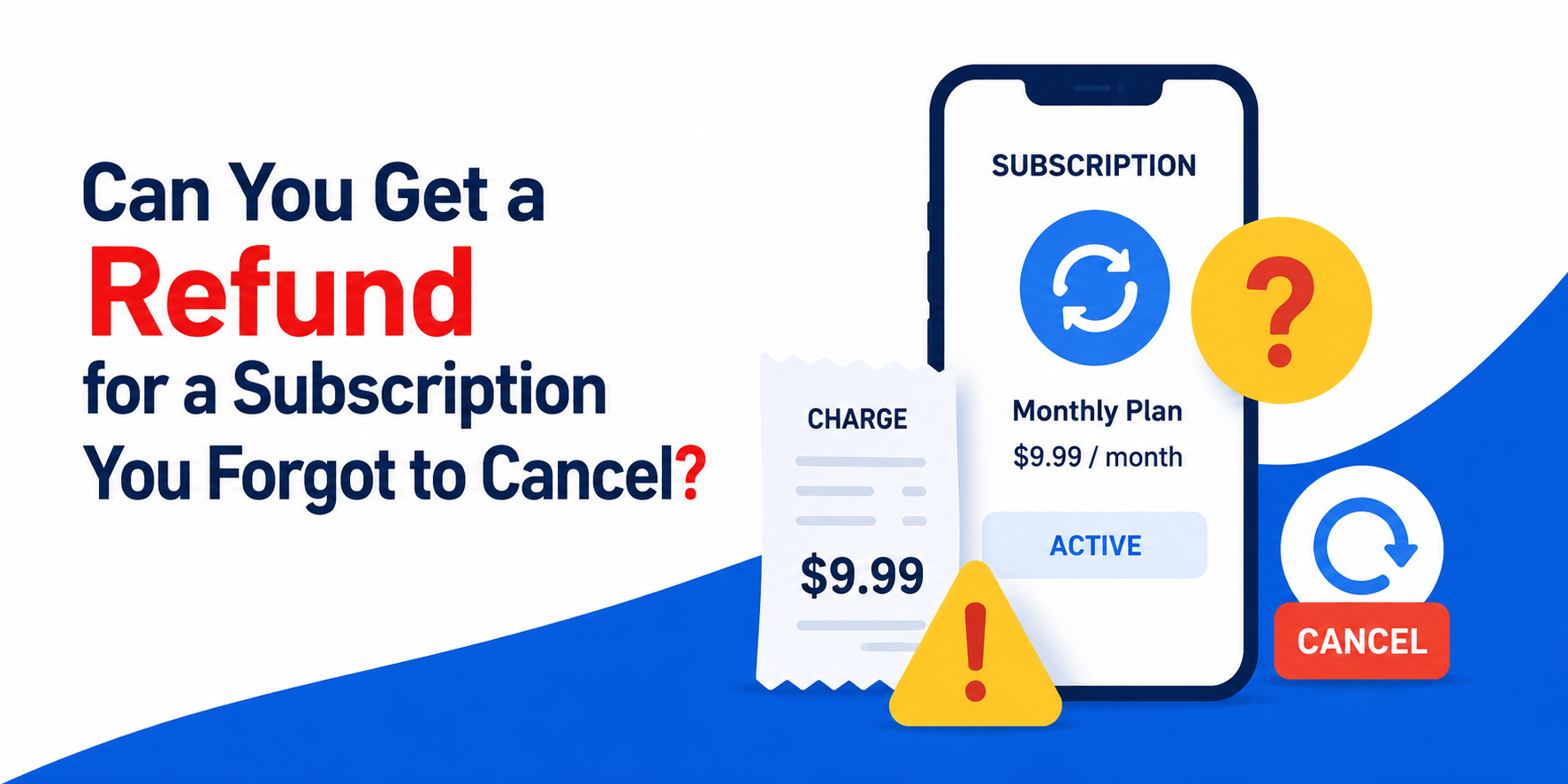
Can You Get a Refund for a Subscription You Forgot to Cancel?
The direct answer is: sometimes yes, sometimes no — and the outcome usually comes down to a few key factors.
Refund eligibility for a forgotten subscription generally depends on:
- Company policy — Many services have clear refund windows (typically 14 to 30 days). Others have strict no-refund policies for digital subscriptions.
- Timing — The sooner you contact the company after being charged, the better your chances.
- Service usage — If you haven't logged in or used the service since the renewal, companies are more likely to refund.
- Applicable consumer protection laws — Some states have auto-renewal disclosure laws that strengthen your position.
- Payment method — Credit card holders have more options for disputing charges than debit card holders.
There is no federal law in the United States that automatically entitles you to a refund just because you forgot to cancel. However, many businesses have goodwill refund policies and will work with customers — particularly if you have a clean account history and reach out promptly.
What to Do If You Forgot to Cancel a Subscription
If you've just discovered an unexpected recurring charge, move quickly. The faster you act, the better your chances of a successful outcome.
Step 1: Cancel the Subscription Immediately
Before anything else, cancel the subscription so no additional charges are applied. Log into your account, find the subscription or billing settings, and follow the cancellation process. Take a screenshot as confirmation. For mobile apps, cancellations must be done through your Apple ID or Google account settings, not through the app itself.
Step 2: Review the Company's Refund Policy
Go to the company's website and search for their refund policy or terms of service. Look for any time limits, conditions, or guarantees. Many software and digital services offer a 14 to 30-day money-back guarantee — if you're within that window, you're in a strong position.
Step 3: Contact Customer Support
Reach out to customer support via live chat, phone, or email. Live chat often gets the fastest response. Be clear about who you are, what you were charged, and when the charge occurred.
Step 4: Request a Refund Politely and Clearly
When you request a refund, keep your message professional and concise. Here's a simple approach: state the charge date, the amount, confirm you have now cancelled, note that you did not use the service, and ask whether a refund can be issued as a courtesy. Avoid being aggressive — polite requests are far more likely to succeed.
Step 5: Keep Documentation
Save everything. Screenshots of the cancellation confirmation, copies of your support chat, email threads, and screenshots of the charge on your bank statement all become valuable if the situation escalates. Good documentation is especially important if you need to file a billing dispute or chargeback later.
How to Improve Your Chances of Getting a Subscription Refund
Not every refund request gets approved, but these steps significantly increase your odds:
- Act within 48 to 72 hours of the charge — many companies have informal grace periods even if they don't advertise them.
- Show that you didn't use the service — no logins, no streaming activity, no downloads since the renewal date.
- Be specific about the charge — provide the exact date, amount, and your account email address.
- Stay calm and professional — angry messages rarely produce refunds. A clear, respectful tone does.
- Mention that you have been a long-term customer if applicable — loyalty can work in your favor.
- Ask to speak with a supervisor if the first agent declines — retention teams often have more authority to issue refunds.
What If the Company Refuses a Refund?
If the company's customer support declines your refund request, you still have options:
- Escalate to a supervisor or retention team: Ask to be transferred to someone with authority to make an exception. These teams often have tools and incentives to keep customers happy.
- File a complaint with the FTC: You can submit a consumer complaint at ReportFraud.ftc.gov. While the FTC cannot resolve individual disputes, patterns of complaints can trigger investigations.
- Contact the Consumer Financial Protection Bureau (CFPB): If the billing issue involves a bank or credit card company, the CFPB can help mediate. Visit consumerfinance.gov/complaint to file.
- Check your state attorney general's office: Many states have consumer protection divisions that handle subscription billing complaints.
- Consider a chargeback: If other options are exhausted, contact your bank or credit card company to dispute the charge.
Can You Dispute Subscription Charges with Your Bank or Credit Card Company?
Yes, if the company refuses to refund you, you may be able to dispute the charge with your financial institution. This is called a chargeback, and it's a formal billing dispute process.
Here's how it typically works:
- Contact your bank or credit card issuer and explain that you want to dispute a recurring charge.
- Provide documentation: account statements, cancellation confirmation, and any communication with the company.
- The bank investigates — this typically takes 30 to 90 days.
- If the dispute is resolved in your favor, the charge is reversed.
Credit cardholders generally have stronger dispute rights than debit card holders. Under the Fair Credit Billing Act (FCBA), credit card users can dispute charges for billing errors. Debit card disputes are governed by the Electronic Fund Transfer Act, which has different timelines and rules.
Important: Chargebacks should be a last resort, not a first move. Filing a chargeback without first contacting the company can result in your account being flagged or closed. Only initiate a chargeback after the company has refused your refund request.
Consumer Rights and Auto-Renewal Laws
Auto-renewal charges are legal in the United States, but companies must follow certain disclosure rules. The Federal Trade Commission requires subscription services to clearly and conspicuously disclose their auto-renewal terms before a consumer completes a purchase. This includes:
- Stating that charges will recur automatically
- Disclosing the billing amount and frequency
- Explaining how to cancel before the next billing cycle
Several states have passed stronger auto-renewal laws. California, for example, requires companies to send renewal reminders before charging and to provide a simple online cancellation method. If you live in a state with strong auto-renewal protections and the company failed to meet its disclosure obligations, you have a stronger case for a refund.
The Consumer Financial Protection Bureau (CFPB) also provides guidance on recurring payment disputes and can be a resource if your financial institution is involved in the issue.
How RaiseAComplaint.com Can Help
When a subscription company refuses to cooperate, having your experience on the record matters. RaiseAComplaint.com is a U.S.-based consumer review and complaint platform where you can document your billing dispute, share your experience with other consumers, and create a public record that encourages businesses to respond.
Here's how the platform can help in a subscription refund situation:
- Share your experience: Write up what happened — the charge, the cancellation attempt, and the company's response (or lack of it).
- Raise your concern publicly: Businesses often respond faster when complaints are visible to other consumers.
- Document unresolved billing issues: Your complaint creates a permanent record that can be referenced if you escalate to consumer protection agencies.
- Encourage businesses to respond: Many companies monitor platforms like RaiseAComplaint.com and reach out to resolve issues that might otherwise go ignored.
If you have had no luck getting a subscription refund through official channels, visit raiseacomplaint.com and let your voice be heard.
The Bottom Line
Discovering an unexpected subscription charge is frustrating, but it doesn't mean you're out of options. Getting a subscription refund is possible in many situations — especially when you act fast, communicate clearly, and can show you didn't use the service. Start by cancelling immediately, review the company's policy, and contact customer support with a polite, documented request.
If the company won't cooperate, escalate your complaint to the FTC, the CFPB, or your bank. And if you are still getting nowhere, remember that platforms like RaiseAComplaint.com exist specifically to give consumers a voice when businesses fail to respond.
Going forward, a few minutes spent tracking your subscriptions each month can save you from this headache entirely. Set those calendar reminders, monitor your billing statements, and don't let recurring charges fly under the radar.
Frequently Asked Questions
Can I get a refund if I forgot to cancel my subscription?
Yes, in many cases you can — especially if you act quickly. Many companies will issue a courtesy refund if you contact them within a few days of the renewal charge and explain that you forgot to cancel. The outcome depends on the company's policy, how much of the service you used, and how politely and clearly you make your request.
How long do I have to request a subscription refund?
Most companies have a refund window of 14 to 30 days from the charge date. Some have no formal refund policy at all, but may still honor a request as a goodwill gesture. Acting within the first 48 to 72 hours gives you the best chance. The longer you wait, the less likely a refund becomes.
Can I dispute a subscription charge with my bank?
Yes. If the company refuses your refund, you can file a billing dispute — known as a chargeback — with your bank or credit card issuer. Credit cardholders have stronger protections under the Fair Credit Billing Act. Provide documentation including your cancellation confirmation and any communication with the company.
Are auto-renewal subscription charges legal?
Yes, auto-renewal charges are legal in the United States. However, the Federal Trade Commission requires companies to clearly disclose their auto-renewal terms before you sign up, including the billing amount, frequency, and how to cancel. If a company failed to properly disclose these terms, you may have grounds to dispute the charge.
What if I never used the service after the renewal?
Not having used the service since the renewal date is one of the strongest arguments in your favor when requesting a subscription refund. Mention this clearly when you contact customer support. Some companies will check login or activity data to verify your claim and may issue a refund based on zero usage.
Can I get a refund for an Apple App Store or Google Play subscription?
Yes. Apple and Google both have self-service refund processes for subscriptions purchased through their platforms. For Apple, visit reportaproblem.apple.com. For Google, go to your Google Play order history. Refund approvals are handled by Apple and Google, not by the app developer, and are typically decided within a few days.
Will my bank automatically refund a recurring subscription charge?
Banks do not automatically refund subscription charges. You need to initiate a chargeback request by contacting your bank and formally disputing the transaction. The bank will investigate and may reverse the charge if they determine it meets the criteria for a billing dispute. This process can take 30 to 90 days.
What if my subscription refund request is denied?
If the company denies your request, escalate to a supervisor, then consider filing a complaint with the FTC at ReportFraud.ftc.gov or the Consumer Financial Protection Bureau at consumerfinance.gov/complaint. You can also contact your state attorney general's consumer protection office, initiate a chargeback with your bank, or document your experience at RaiseAComplaint.com.
Is a chargeback the same as a refund?
No. A refund is issued voluntarily by the company. A chargeback is a forced reversal initiated by your bank. While both result in money returned to your account, chargebacks involve a formal investigation and can have consequences for your relationship with the merchant — including account closure. See our article on Chargeback vs Refund for a full comparison.
Can I cancel a subscription and still keep access until the end of the billing period?
In most cases, yes. Cancelling a subscription typically stops future charges while allowing you to access the service through the end of your current billing period. However, policies vary. Some services cut off access immediately upon cancellation, particularly for free trials. Always read the cancellation terms before confirming.